

Two editions ago, Verizon's DBIR had a third party involved in 15% of breaches. The 2026 edition puts third-party involvement at 48% of total breaches, up 60% on the prior year's dataset. If your program still treats vendor security as a questionnaire you collect at onboarding, the base rate has moved under you.
This page collects the supply chain and third-party breach figures a risk committee will ask you to source: how often a vendor is involved, what is happening in open source, what these incidents cost, and which industries carry the most exposure. Most figures come from 2025 and 2026 publications. Where two reports measure different things, we say so instead of blending them.
Key supply chain attack statistics at a glance
Six numbers to bring to the risk committee
These six supply chain attack statistics frame the rest of the page. A supply chain attack reaches you through something you trust: a vendor's network, a software update, an open source package or a service provider holding your data. The panel shows how often that happens, how long it takes to find, and how the largest companies rank the problem.
Key stats
- 48%Share of breaches with third-party involvement in the 2026 report's datasetVerizon, Data Breach Investigations Report Executive Summary, 2026
- 60%Increase in breaches with third-party involvement from the previous year's datasetVerizon, Data Breach Investigations Report Executive Summary, 2026
- USD 4.91millionAverage cost of a breach that began with third-party vendor and supply chain compromiseIBM and Ponemon Institute, Cost of a Data Breach Report, 2025
- 267 daysCombined time to identify and contain a supply chain compromise, the longest of any initial vectorIBM and Ponemon Institute, Cost of a Data Breach Report, 2025
- 454,600+New malicious open source packages identified during 2025 (published as "more than" this number)Sonatype, State of the Software Supply Chain, 2026
- 65%Large companies by revenue that call third-party and supply chain vulnerabilities their greatest challenge to cyber resilienceWorld Economic Forum, Global Cybersecurity Outlook, 2026
How often third party breaches start with a vendor
A three-edition climb
Verizon's trend line is the one most boards have seen. The 2025 DBIR reported that the share of breaches where a third party was involved doubled, going from 15% to 30%. The 2026 edition, built on more than 31,000 incidents and more than 22,000 confirmed breaches, reports another jump. Third party breaches have gone from an appendix topic to close to half the dataset in three editions.
Read the definitions before you quote the numbers side by side. Verizon counts any breach in which a third party was involved. IBM counts something narrower, the breaches where vendor and supply chain compromise was the initial attack vector. Both are right. They answer different questions, and your incident plan for responding to third party breaches has to cover both the vendor that gets hit and the vendor that is the door.
48%
Breaches with third-party involvement, out of more than 22,000 confirmed breaches analyzed.
15%
Breaches where vendor and supply chain compromise was the initial attack vector, the second most prevalent vector among 600 breached organizations.
31%
Breaches where exploitation of vulnerabilities was the initial access vector, now the most common one, ahead of credential abuse at 13%.
23%
Third-party organizations that fully remediated missing or improperly secured MFA on their cloud accounts.
| DBIR edition | Breaches with third-party involvement | Dataset |
|---|---|---|
| 2024 | 15% | As restated in the 2025 edition |
| 2025 | 30% | 22,052 incidents, 12,195 confirmed breaches |
| 2026 | 48% | More than 31,000 incidents, more than 22,000 confirmed breaches |
The remediation numbers explain why the trend keeps climbing. In Verizon's 2026 analysis of third-party cloud exposure, 50% of MFA findings were resolved within a month, but for weak passwords and permission misconfigurations it took almost eight months to resolve half of the findings. A year earlier, the 2025 edition put the median time to remediate leaked secrets found in a GitHub repository at 94 days.
Software supply chain attack trends & open source risk
Malware now ships as a dependency
The classic software supply chain attack was a rare, expensive operation against one vendor's build system. Open source registries changed the economics. Publishing a package is free and anonymous, developers install dependencies by the hundred, and the code runs on machines that hold tokens, API keys and CI credentials.
454,600+
New malicious packages Sonatype identified throughout 2025 (published as "more than 454,600").
Over 1.233million
Cumulative known and blocked malware packages across npm, PyPI, Maven Central, NuGet and Hugging Face (published as "over" this number).
Over 99%
Share of open source malware that occurred on npm in 2025 (published as "over 99%").
Over 500
Packages compromised by the self-replicating Shai-Hulud worm, per CISA's alert of September 23, 2025 (published as "over 500").
Malware is the loud half of open source risk. The quiet half is ordinary, unpatched code. Black Duck's 2026 OSSRA report covers audits of 947 codebases between November 2024 and October 2025 and found open source in 98% of them. Most of your vendors' products are assembled the same way, which means their dependency hygiene is part of your exposure whether or not your questionnaire asks about it.
What audits of 947 commercial codebases found
State-linked groups have noticed. Sonatype identified more than 800 packages associated with the Lazarus Group in 2025, 97% of them on npm, most combining a dropper with credential theft. For a third-party risk team, the practical question to put to a critical software vendor is short: can you produce a software bill of materials, and how fast do you pull a poisoned dependency once it is reported?
Cost & impact of a third party data breach
Slower to find, costlier to close
A third party data breach costs more than the average breach for a plain reason: it takes longer to see. The attacker arrives over a trusted connection, the logs that matter sit in someone else's environment, and your response waits on a vendor's disclosure. IBM's 2025 study of 600 breached organizations measured the gap.
USD 4.91million
Average cost of a breach starting with third-party vendor and supply chain compromise, second costliest initial vector after malicious insiders.
267 days
Combined time to detect and contain a supply chain compromise, the longest of the initial vectors IBM measured.
USD 227,244added
Cost a supply chain breach added to the average breach, the largest of the cost-increasing factors IBM charted.
Over $100million
Loss level exceeded by the extreme top 2.5% of software supply chain cyber insurance claims (published as "more than").
IBM's 2026 edition was published in July. Its global news release puts the average breach at $4.99 million but does not break out the supply chain vector, and the full report sits behind a registration form we did not use as a source. IBM's Canadian release does: supply-chain compromise is now the largest factor increasing breach costs in Canada, adding approximately CA$367,899 on average.
Insurance claims tell the same story from the payout side. Verizon's 2026 Breach Impact Study covers 69,683 cyber insurance claims from US policyholders for incidents between January 1, 2019 and October 31, 2025. Software supply chain claims are only 2% of the total, yet their median loss is more than double that of the overall dataset. Incidents at a hosting or service provider run to a median of around $141,000, with the extreme top 2.5% reaching more than $12 million.
Where the money goes matters for your contracts. Per the same study, business interruption accounts for 50% of all losses in supply chain or third-party incidents, and contingent business interruption, meaning interruption caused by a third party's outage, made up 13% of known loss types in 2024, the first year it was tracked separately.
Supply chain attack examples that shaped the data
Five incidents behind the trend lines
Statistics move when single incidents hit thousands of customers at once. These supply chain attack examples are the ones the reports above keep returning to, with figures taken from the government advisory or investigator's write-up for each. They cover four different ways in: a poisoned update, a backdoored open source component, stolen credentials for a shared platform, and a vulnerability in widely deployed enterprise software.
| Incident | Way in | Published figure |
|---|---|---|
| SolarWinds Orion (2020) | Trojanized code injected into a vendor's software update | Nearly 18,000 customers received a compromised update, by SolarWinds' estimate |
| XZ Utils backdoor, CVE-2024-3094 (2024) | Malicious code in the upstream tarballs of an open source library, starting with version 5.6.0 | NVD base score of 10, Critical |
| Snowflake customer instances (2024) | Customer credentials stolen by infostealer malware, some from contractor laptops | Approximately 165 potentially exposed organizations notified |
| Shai-Hulud npm worm (2025) | Self-replicating malware publishing itself through compromised maintainer accounts | Over 500 packages compromised |
| Oracle E-Business Suite exploitation (2025) | A vulnerability in enterprise software exploited across many customers | Cited by Verizon as a contributor to healthcare's third-party figure |
The Snowflake campaign deserves a second look because nothing was exploited. Mandiant's investigation found that at least 79.7% of the accounts the threat actor used had prior credential exposure, with some infostealer infections dating back to 2020, and that some stolen credentials were still valid years later because they had not been rotated. In several cases the infection began on a contractor's laptop that was also used for personal activity. One unmanaged device, many customers.
SolarWinds shows the opposite pattern. According to the GAO's account, the threat actor ran a test injection against the Orion build in 2019 before shipping trojanized code in 2020, then went after a smaller subset of high-value customers. Wide distribution, narrow targeting. No questionnaire answer from the vendor would have revealed it, which is why the examples point toward detection speed and blast-radius limits more than toward better forms.
Third-party cyber risk across regulated industries
Where exposure & scrutiny meet
Third-party cyber risk is not spread evenly. Verizon's 2026 industry tables report a third-party figure for each major sector, and the spread is wide. Read them with Verizon's own caveat in mind: sectors differ in reporting requirements and sample size, so a lower figure can reflect what gets disclosed as much as what happens.
Share of breaches with third-party involvement, by sector
Financial services and healthcare sit at the bottom of that chart and at the top of the regulatory agenda. US banking regulators set the baseline in the Interagency Guidance on Third-Party Relationships (OCC, FDIC and Federal Reserve, June 2023). In the EU, DORA, Regulation (EU) 2022/2554, has applied since January 17, 2025, and on November 18, 2025 the European Supervisory Authorities published the list of designated critical ICT third-party providers under its oversight framework. For how those expectations translate into controls, see Certa's piece on cybersecurity in third-party risk management.
61%
Manufacturing breaches with third-party involvement, across 2,713 confirmed breaches in the sector.
34%
Financial and insurance breaches with third-party involvement, across 1,300 confirmed breaches.
32%
Healthcare breaches with third-party involvement, across 1,438 confirmed breaches.
$6.3million
Average reported cost of a financial services breach, the sector with the highest concentration of AI-driven attacks alongside energy.
Concern is rising faster than practice. In the World Economic Forum's 2026 survey, 65% of large companies by revenue named third-party and supply chain vulnerabilities as their greatest challenge, up from 54% in 2025. Yet the UK government's 2025 survey of 2,180 businesses found that 14% formally review the risks posed by their immediate suppliers and 7% look at their wider supply chain. Even among large businesses the figures were 45% and 25%.
Methodology & sources behind these supply chain cyber risk numbers
How these figures were chosen
A source qualified only if it is primary: the publisher's own report, news release, dataset or advisory, opened and read for this page. That means breach investigation data (the Verizon Data Breach Investigations Report and its companion Breach Impact Study), the IBM and Ponemon cost study, registry and code audit research from Sonatype and Black Duck, the World Economic Forum's executive survey, UK government survey data, and US government and investigator write-ups for the named incidents. Roundup posts of third party risk statistics were not used, because most repeat figures without their year or their definition.
The date window is 2025 and 2026 publications for every trend figure. Older material appears only in the incident table, where the event itself is older. For IBM's vector-level cost and time figures we used the 2025 report, the latest edition whose full text we could read without registering. Supply chain cyber risk is measured differently by each publisher, so each figure keeps its publisher's wording and scope.
Figures are reproduced exactly as published. Nothing was rounded, averaged or combined across sources, and where a report says "more than" or "approximately" the label says so too. Two things we looked for and left out: a regulator-published count of individuals affected by the 2024 Change Healthcare incident, and a Gartner survey on third-party business interruptions. Neither page could be opened directly when this was written, so neither figure appears.
- Verizon, Data Breach Investigations Report landing page (2026 edition)
- Verizon, 2026 Data Breach Investigations Report Executive Summary
- Verizon, 2025 Data Breach Investigations Report Executive Summary
- Verizon, 2026 DBIR Healthcare Snapshot
- Verizon, 2026 Breach Impact Study
- IBM and Ponemon Institute, Cost of a Data Breach Report 2025
- IBM, news release on the 2026 Cost of a Data Breach Report (July 29, 2026)
- IBM Canada, news release on the 2026 Cost of a Data Breach Report (July 29, 2026)
- Sonatype, 2026 State of the Software Supply Chain, open source malware chapter
- Black Duck, 2026 Open Source Security and Risk Analysis Report
- World Economic Forum, Global Cybersecurity Outlook 2026
- UK Government, Cyber Security Breaches Survey 2025
- U.S. Government Accountability Office, SolarWinds cyberattack summary (2021)
- NIST National Vulnerability Database, CVE-2024-3094
- Google Cloud and Mandiant, UNC5537 targets Snowflake customer instances (2024)
- CISA, Widespread Supply Chain Compromise Impacting npm Ecosystem (September 23, 2025)
- European Supervisory Authorities, designation of critical ICT third-party providers under DORA (November 18, 2025)
- OCC, FDIC and Federal Reserve, Interagency Guidance on Third-Party Relationships, Federal Register (June 9, 2023)
What the numbers mean for regulated enterprises
Turning base rates into program changes
Taken together, the data says three things. Vendor involvement is now the common case in breach data, so the assumption behind annual reassessment no longer holds. The costliest part of a vendor incident is the time before you know about it. And the way in is as likely to be a dependency or a contractor's credential as the vendor's own perimeter.
That is the ground cyber supply chain risk management is meant to cover. NIST's guidance on the subject is SP 800-161 Rev. 1, updated in November 2024. For a bank, a drug manufacturer or a defense supplier, supply chain attack prevention comes down to a handful of program decisions you can check this quarter:
- Tier by blast radius. Rank vendors by the data they hold, the access they have and how long you can operate without them, then set review depth by tier.
- Watch between reviews. Put critical and high-risk vendors on outside-in security signals and breach news, with a threshold that triggers a reassessment.
- Ask about the software, not only the company. For critical software vendors, request an SBOM, their patch timelines for exploited vulnerabilities, and how they vet open source dependencies.
- Close credential gaps in contracts. Require MFA on every account a vendor or its contractors use to reach your data, and a rotation rule for shared credentials.
- Map fourth parties for critical services. Know which cloud, payroll, file transfer and support platforms your top-tier vendors share.
- Set a notification clock. Write an incident notice deadline into the contract and rehearse the first days of a response with the vendor's named contact.
- Offboard completely. Revoke access, recover or destroy data, and record both when a relationship ends.
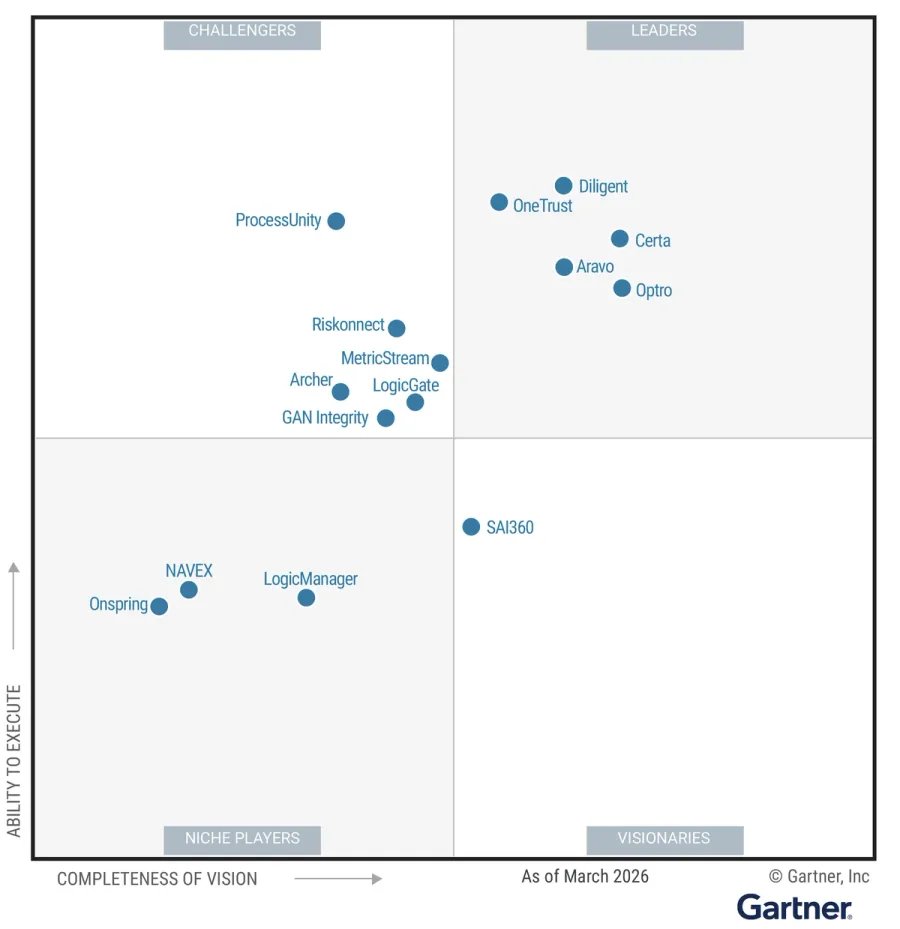
The second item is where most programs stall, because nobody has time to read a feed for every vendor. Certa's approach to continuous monitoring of third parties is to pull live data from BitSight, Black Kite, Rapid Ratings and Interos to keep vendor risk profiles current between reassessments, so a rating drop or a new exposure shows up between reassessments instead of waiting for the next annual review.
The Certa TPRM suite runs that as Third Party Risk Management By Exception℠: every third party is scored across seven risk domains and monitored continuously, and, in Certa's words, "Your team doesn't work the whole portfolio, it works the rows that changed." The decision on what to do about a flagged vendor stays with your analysts.
Frequently asked questions about supply chain attacks
Short answers to the questions these numbers raise most often.
What Is a Supply Chain Attack?
A supply chain attack compromises an organization through a trusted outside party instead of attacking it directly. The way in can be a vendor's network, a tampered software update, a malicious open source package or stolen credentials for a shared platform. If you are asking what is a supply chain attack in practice, SolarWinds is the reference case: by the GAO's account, nearly 18,000 customers received a compromised update of software they had every reason to trust.
What Percentage of Breaches Involve a Third Party?
Verizon's 2026 Data Breach Investigations Report puts third-party involvement at 48% of total breaches, up from 30% in the 2025 edition and 15% the year before. IBM measures a narrower slice: in its 2025 Cost of a Data Breach Report, vendor and supply chain compromise was the initial attack vector in 15% of breaches. Quote each figure with its definition.
Which Industries See the Most Third-Party Breaches?
In Verizon's 2026 industry tables, retail (68%) and manufacturing (61%) report the highest share of breaches with third-party involvement, ahead of public administration (36%), financial and insurance (34%) and healthcare (32%). Verizon cautions that reporting requirements and sample sizes differ by sector, so compare with care.
How Can Enterprises Reduce Supply Chain Attack Risk?
Start by tiering vendors by the data and access they hold, then monitor the top tiers continuously instead of once a year. Require MFA and credential rotation for every vendor and contractor account, ask critical software vendors for an SBOM and patch timelines, and map the fourth parties your key vendors share.
Then plan for failure: a contractual notification deadline, a rehearsed response, and a clean offboarding process limit the damage when a vendor is hit anyway.
TPRM Articles
Keep reading