
Your annual reassessment closed in March. In June the vendor's parent was sanctioned, in August its payment behavior slipped, and in September a set of its admin credentials showed up in a stealer log. None of that is in the file, because the file is a questionnaire and the questionnaire is a year old.
Regulators have stopped treating that gap as acceptable. The Interagency Guidance on Third-Party Relationships (OCC, FDIC and Federal Reserve, June 2023) says ongoing monitoring "may be conducted on a periodic or continuous basis, and more comprehensive or frequent monitoring is appropriate when a third-party relationship supports higher-risk activities, including critical activities." DORA, Regulation (EU) 2022/2554, has applied to EU financial entities since January 17, 2025 with its own monitoring duties for ICT third-party providers.
Buying a feed is the easy part. Below are the nine kinds of data a monitoring program needs, what each can and can't tell you, and what should happen when one moves.
The Short Answer
Continuous third-party monitoring runs on nine data sources: sanctions and watchlists, adverse media, security ratings, attack surface signals, dark web exposure, credit and financial health, beneficial ownership and registry changes, ESG and forced labor indicators, and supply chain disruption and geopolitical events. Each needs a refresh cadence, an owner and a rule for what counts as an alert, or it becomes one more inbox nobody reads.
What continuous vendor monitoring needs to see
What changed since the last review
Read the guidance closely and it hands you the data requirements. According to the Interagency Guidance, ongoing monitoring lets a banking organization escalate "material or repeat audit findings, deterioration in financial condition, security breaches, data loss, service interruptions, compliance lapses, or other indicators of increased risk." Its list of factors adds changes in financial condition, lapses in insurance coverage, reliance on subcontractors and where they sit, and the response to new vulnerabilities. Every item is a change, and a document collected once a year can't show you one.
That is the job of continuous monitoring. NIST framed it for security in SP 800-137 (2011) as a program that gives "visibility into organizational assets, awareness of threats and vulnerabilities," and third-party programs have since borrowed the idea for every other risk domain. Continuous vendor monitoring does not mean watching every vendor every second. Each source refreshes on the clock it actually runs on, and a person hears about it only when something crosses a line you drew in advance.
Ask three things of any feed. How often does the underlying fact change? Who owns the response? Where is the line between a logged change and an alert? The table gives a working answer for all nine, and Certa's piece on continuous vendor monitoring components covers the program around them.
| Data source | Refresh | Typical owner | Alert when |
|---|---|---|---|
| Sanctions and watchlists | Daily, on list change | Compliance | A possible match on a vendor, owner or director |
| Adverse media | Daily | Compliance | A credible source reports an investigation, charge or conviction |
| Security ratings | Daily to weekly | InfoSec | A grade drop or a fall below the tier's floor |
| Attack surface | Daily | InfoSec | An actively exploited vulnerability on an exposed asset |
| Dark web exposure | Daily | InfoSec | Fresh credentials or a leak-site listing |
| Credit and financial health | Weekly to quarterly | Finance or procurement | A downgrade, a filing or slipping payments |
| Ownership and registry | On filing | Compliance or legal | A new controlling owner or a status change |
| ESG and forced labor | On list update, plus quarterly | ESG or trade compliance | A listed entity or region in the vendor's chain |
| Disruption and geopolitics | Real time | Supply chain or resilience | An event at a mapped site or sub-tier supplier |

Sanctions & watchlist screening data
The one feed with a legal deadline
Start here because the clock isn't yours to set. OFAC's own FAQ says the SDN list "is frequently updated. There is no predetermined timetable, but rather names are added or removed as necessary and appropriate." A vendor that was clean at onboarding can be blocked on a Tuesday afternoon, and screening that runs at intake and renewal finds out months later.
The OFAC SDN list is published in formats built for this, including XML and delimited files that load straight into a screening engine. It is also only one list. OFAC and the Bureau of Industry and Security keep separate ones, DHS publishes the UFLPA Entity List, and a global program adds the EU, UK and UN regimes. Good watchlist screening covers the set your counsel has scoped and re-screens every vendor whenever any list changes.
Two details decide whether the data is useful. Under OFAC's 50 Percent Rule, an entity owned 50 percent or more in the aggregate by blocked persons is itself blocked, whether or not its name appears, so list data has to be joined to ownership data (source seven). And name-only matching against a vendor master full of abbreviations buries analysts in false positives. Screen with the identifiers you hold: registered name, country and registration number.
Adverse media monitoring feeds
News that arrives before the enforcement action
A sanctions list tells you what a government has decided. The news tells you what it may decide next. Adverse media monitoring watches news outlets, court records, regulatory disclosures and penalty notices for your vendors and the people behind them. A bribery investigation or a labor complaint usually surfaces here first.
It is also the noisiest source here. The Wolfsberg Group's Negative News Screening FAQs (2022) were written for banks screening customers, and three of their ideas carry straight over to third parties:
- Pick your risk stage. Wolfsberg describes a story maturing from allegation to investigation to charges to conviction, and notes that alert volumes at the allegation stage will be higher. Decide per tier where you want to be told.
- Rate the source. A wire service and an anonymous blog are different evidence. Scope the sources you accept and the look-back period, and write both down.
- Screen the delta. After the first full pass, screen only what has changed since the last run, and record the rationale for every disposition, false positives included.
The feed catches more than financial crime. Safety violations, press-reported breaches and executive departures all land here, which is why it belongs alongside your reputational risk practices.
Security ratings & outside-in cyber scores
A daily grade between SOC 2 reports
A SOC 2 Type II report covers a period that has already ended. Security ratings fill the months in between by scoring what can be observed from the internet without the vendor's cooperation: patching cadence on exposed systems, TLS and email authentication configuration, open ports, known malware communication from the vendor's address space.
Be honest about what the number is. It measures the perimeter and says nothing about access reviews or whether backups restore, and attribution can be wrong. Treat it as a tripwire that sends you back to the vendor, and alert on movement more than level: a vendor that drops a full grade in a week has had something happen. Set a floor per tier and keep the rating history on the file. The cybersecurity risk assessment guide covers how the outside-in view fits with questionnaires and evidence review.
Attack surface monitoring signals
The specific exposure, not the score
Ratings compress hundreds of observations into one grade. Attack surface monitoring gives you the observations: this hostname, this VPN appliance, this software version, this expired certificate. When a new edge-device vulnerability lands, the question from your CISO is never "what's their score?" It's "which of our critical vendors run that product on the internet?" Only asset-level data answers it.
Verizon's 2026 Data Breach Investigations Report found that 31% of breaches now start with software vulnerabilities, "beating stolen passwords as the top way attackers get in." To keep the feed from flooding your queue, filter it through CISA's Known Exploited Vulnerabilities catalog, which CISA describes as "the authoritative source of vulnerabilities that have been exploited in the wild" and recommends as an input to vulnerability prioritization. A KEV-listed flaw on a critical vendor's exposed asset is an alert. A medium-severity finding on a marketing microsite is a log entry. A contract clause requiring notice and a remediation timeline for exploited vulnerabilities turns that alert into a ticket the vendor has to answer.
Dark web monitoring for leaked credentials
Evidence that someone already got in
Everything above is about weakness. This source is about compromise. Dark web monitoring looks for your vendors in three places: credential dumps and infostealer logs, ransomware leak sites, and criminal marketplaces where access to a corporate network is sold.
Triage on freshness and on proximity to you. A ten-year-old password from a recycled combo list means little. Last week's stealer log holding a vendor engineer's session for the support tool that reaches into your tenant is an incident in progress. Answer four questions in the first hour:
- Is the exposed account one that touches your data, your network, or a shared system?
- How recent is the capture, and does it include session tokens as well as passwords?
- Has the vendor been told, and has it confirmed a reset and a review of that account's activity?
- Does the contract's breach-notification clause start running, and has your incident team been looped in?
One caution: a leak-site listing is a criminal's claim. Call the vendor the same day, and don't report it as a confirmed breach until the vendor has verified it.
Credit risk monitoring & financial health data
Failure rarely arrives without warning
The guidance names "deterioration in financial condition" as an escalation trigger and lists "changes in the third party's financial condition, including its financial obligations to others" among the factors to watch. Most programs meet that with financial statements at onboarding and renewal, which for a private vendor can be more than a year old the day you read them.
Credit risk monitoring closes the gap with data that moves faster than audited accounts: trade payment behavior, liens and judgments, bankruptcy and insolvency filings, credit rating actions, and for public companies the filings and market signals. Watch payment behavior most closely. A vendor paying its own suppliers late is telling you about its cash position well before the annual accounts do.
When a critical vendor is downgraded:
- Request current management accounts.
- Confirm the exit plan and any escrow or step-in rights still hold.
- Check which other vendors in your portfolio depend on the same company.
Beneficial ownership & corporate registry changes
Know when the owner changes
You approved the vendor under one set of owners. An acquisition or a quiet share transfer can put it under another, bringing new sanctions exposure, new conflicts of interest and sometimes a new jurisdiction for your data. Registry monitoring watches for those filings, plus changes of name, address and legal status.
Coverage depends on where the vendor is registered. In the UK, a person with significant control is usually anyone with more than 25% of a company's shares or voting rights, and the company must tell Companies House about changes within 14 days of confirming them. In the United States the picture is thinner than many teams assume. FinCEN's interim final rule of March 26, 2025 exempted U.S. companies from beneficial ownership reporting, and FinCEN's final rule, effective August 14, 2026, made those exemptions permanent. For domestic vendors, ownership data has to come from state filings, commercial data providers and the vendor's own attestations.
Screen new owners the day the change is detected, re-run the conflict-of-interest check, and for a critical vendor read the contract's change-of-control clause.
ESG risk & forced labor indicators
Where a list can stop a shipment
Much of what gets filed under ESG risk moves slowly: emissions disclosures, audit certifications, policy attestations. Forced labor does not, and it carries hard consequences. Under the Uyghur Forced Labor Prevention Act, CBP has enforced a rebuttable presumption since June 21, 2022 that goods made wholly or in part in Xinjiang, or by an entity on the UFLPA Entity List, are barred from entry unless the importer shows otherwise by "clear and convincing evidence." DHS keeps adding names, and its list page showed a last update of October 28, 2026 when this post was written.
Europe is building its own version. The EU Forced Labour Regulation, Regulation (EU) 2024/3015, was adopted on November 19, 2024 and applies from December 14, 2027, after which no product made with forced labor may be sold in or exported from the EU market. The Commission's Forced Labour Single Portal launched on June 30, 2026, and its risk database is meant to identify the geographical areas and products at risk.
The data to monitor, then:
- Government lists: the UFLPA Entity List today, the EU risk database as it fills in.
- Supplier and sub-tier locations, matched against high-risk regions and commodities.
- Third-party audit results and certifications, with their expiry dates.
The catch is tier depth. A first-tier supplier can pass every check while its raw material traces back to a listed entity, so these indicators only work against a map that goes below tier one.
Supply chain monitoring for disruption & geopolitical events
Events mapped to the sites you depend on
The vendor controls this source least. The Interagency Guidance asks banking organizations to consider "factors and conditions external to the third party that could affect its performance and financial and operational standing," along with the location of subcontractors and any related data. Earthquakes, floods, port closures, strikes, export controls, tariffs and armed conflict all qualify.
Event data is plentiful. The expensive part is the map. Supply chain monitoring is only as good as your record of where each vendor operates: the plant, the data center, the logistics hub and the sub-tier suppliers behind them. A typhoon alert for a province is noise until it's joined to the critical suppliers with sites inside it. NIST SP 800-161 Rev. 1 makes the same point for technology supply chains, with guidance on identifying, assessing and mitigating risk "throughout the supply chain at all levels of their organizations."
Build the map from what you already collect: site addresses from onboarding, subcontractor disclosures from due diligence, recovery locations from the continuity plan. Then treat each event as a test. Could you name the affected vendors within an hour?
Orchestrating monitoring data in Certa
Nine feeds, one record, only the exceptions
Buy all nine sources and you own nine consoles, nine alert formats and nine opinions about the same vendor. The Interagency Guidance expects a banking organization to dedicate "sufficient staffing with the necessary expertise, authority, and accountability" to ongoing monitoring. Few third party risk monitoring teams have the headcount to read every feed by hand. The work that matters is the plumbing: one vendor record, one set of thresholds by tier, one queue.
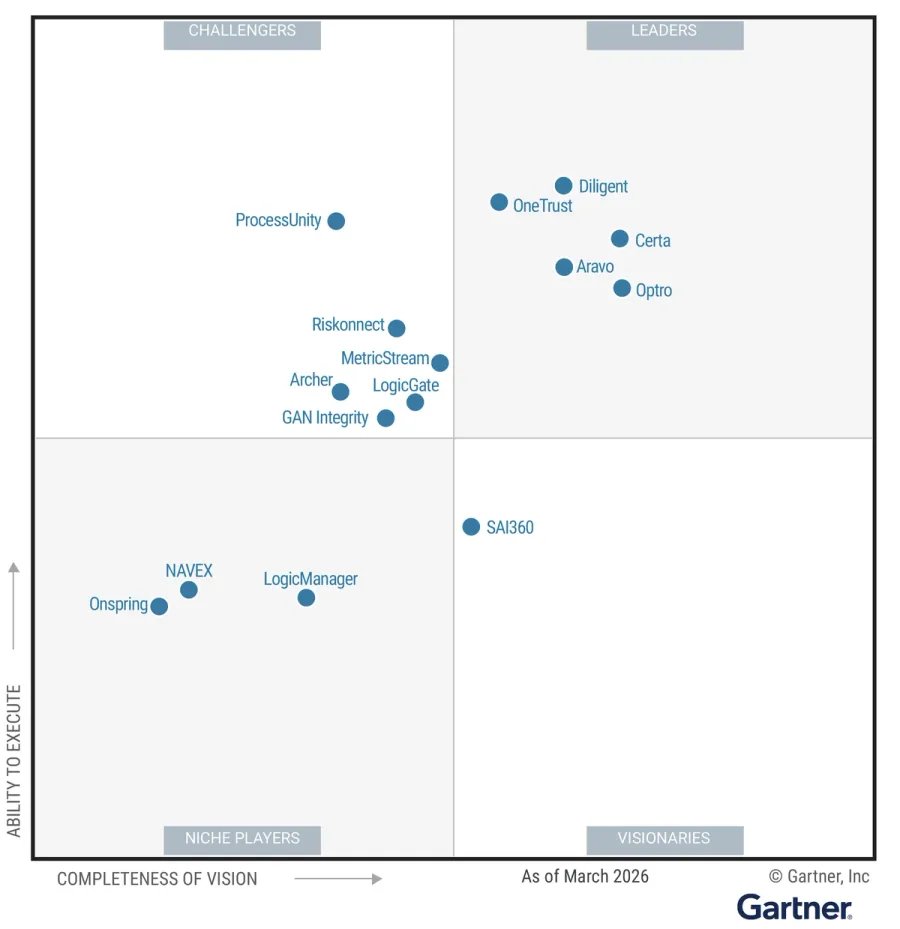
That is how Certa treats vendor monitoring. The platform connects to the data sources a program already trusts through 130+ integrations. Certa can connect live feeds from providers such as BitSight, Black Kite, Rapid Ratings and Interos that keep vendor risk profiles current between reassessments, with Castellum.AI for sanctions and PEP screening and Middesk for company data. Each signal lands on the same third-party record and re-scores it across Certa's seven risk domains. Certa calls the operating model Third Party Risk Management By Exception℠: "Your team doesn't work the whole portfolio, it works the rows that changed." The resource third-party monitoring explained walks through the model.
The triage is where the Certa AI agents come in. The Adjudicate Agent gives confidence-scored, explainable calls on sanctions and adverse media hits, so analysts stop chasing false positives, and the analyst keeps the decision. Every screen, adjudication and disposition is captured with documented rationale, citations and timestamps, the record an examiner asks for when an alert was closed without action. A web-infrastructure leader went from 6 systems to 1 on Certa, consolidating 8 to 10 teams onto one platform.
Whatever you run it on, the test is the same. Pick one critical vendor and ask what you'd know by tomorrow morning if its owner, its credit, its perimeter or its factory changed tonight.
Sources
- OCC, FDIC and Federal Reserve, Interagency Guidance on Third-Party Relationships: Risk Management, 88 FR 37920 (June 9, 2023)
- OCC Bulletin 2023-17, Third-Party Relationships: Interagency Guidance on Risk Management (June 6, 2023)
- OFAC, Specially Designated Nationals and Blocked Persons List (SDN)
- OFAC, Frequently Asked Questions: Sanctions Lists and Files
- OFAC, FAQ 401 on the 50 Percent Rule (August 13, 2014)
- The Wolfsberg Group, Negative News Screening FAQs (2022)
- NIST SP 800-137, Information Security Continuous Monitoring (ISCM) for Federal Information Systems and Organizations (September 2011)
- NIST SP 800-161 Rev. 1, Cybersecurity Supply Chain Risk Management Practices for Systems and Organizations
- CISA, Known Exploited Vulnerabilities Catalog
- Verizon, 2026 Data Breach Investigations Report
- FinCEN, Beneficial Ownership Information Reporting
- GOV.UK, People with significant control (PSCs)
- U.S. Customs and Border Protection, Uyghur Forced Labor Prevention Act
- DHS, UFLPA Entity List
- European Commission, Forced Labour Regulation
- EIOPA, Digital Operational Resilience Act (DORA)
Third-party monitoring data questions
Four questions that come up whenever a program moves from periodic reviews to live data.
What Is Continuous Monitoring in Third-Party Risk?
It is the practice of watching external and internal data about a third party between formal assessments, so a change in its risk reaches you when it happens instead of at the next review. The Interagency Guidance on Third-Party Relationships (June 2023) says ongoing monitoring may be periodic or continuous, with more frequent monitoring for higher-risk and critical activities. It supplements the periodic assessment and does not replace it.
How Often Should Third-Party Risk Monitoring Run?
As often as the underlying fact changes. Sanctions lists, cyber exposure and dark web data change daily, so screen daily. Credit data moves weekly to quarterly, registries change on filing, and disruption events need real-time alerts for mapped sites. Then scale by tier: critical vendors get every feed, low-risk vendors may only need sanctions and adverse media.
Which Data Sources Matter Most for Critical Vendors?
All nine apply to a critical vendor, but four carry the most weight: sanctions and ownership data because the obligation is legal, attack surface and dark web data because they show an incident forming, and financial health because a failing vendor takes your service down with it. For a critical supplier of physical goods, add forced labor indicators and site-level disruption alerts.
How Do You Cut Alert Noise From Monitoring Data?
Decide what an alert is before you turn the feed on. Alert on change instead of level, set thresholds by vendor tier, match on identifiers beyond the name, and after the first full pass screen only the delta. Auto-close the routine with a recorded rationale so the closures stand up in an audit.
TPRM Articles
Keep reading